What Is Human Furniture in BDSM?
Becoming a table. A footstool. A lamp. A tray.
Not metaphorically. Literally.
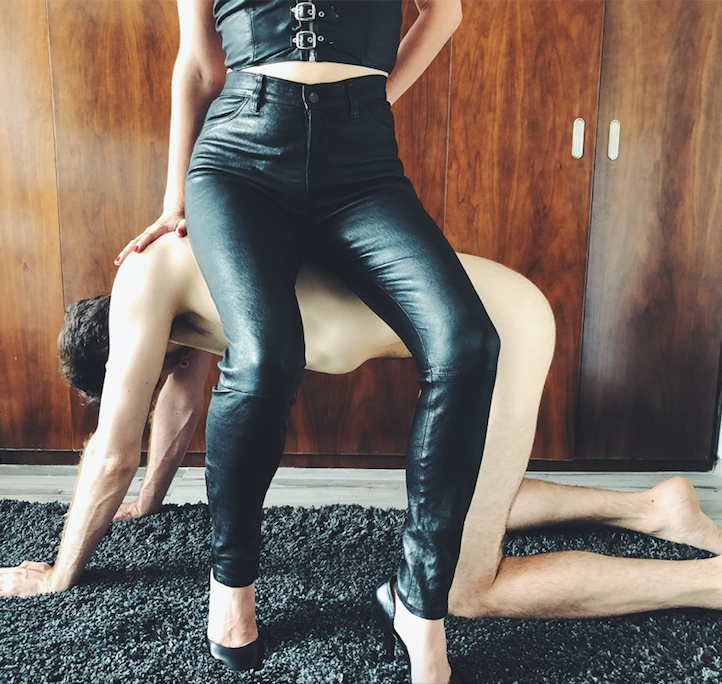
Human furniture, or forniphilia, is a BDSM kink that is a form of objectification play. A human furniture kink involves a submissive, or bottom, assuming the role of furniture or household object. The Domme can transform her submissive into any piece of furniture – a table, stool, footrest, lamp, coat rack, or tray, a toilet, pin cushion, garbage disposal, your imagination is the limit. Bondage, restraints and gags can be added to amplify the experience of restriction and objectification. Props can breathe life into the scene, accentuating the feelings of being used as a piece of furniture.
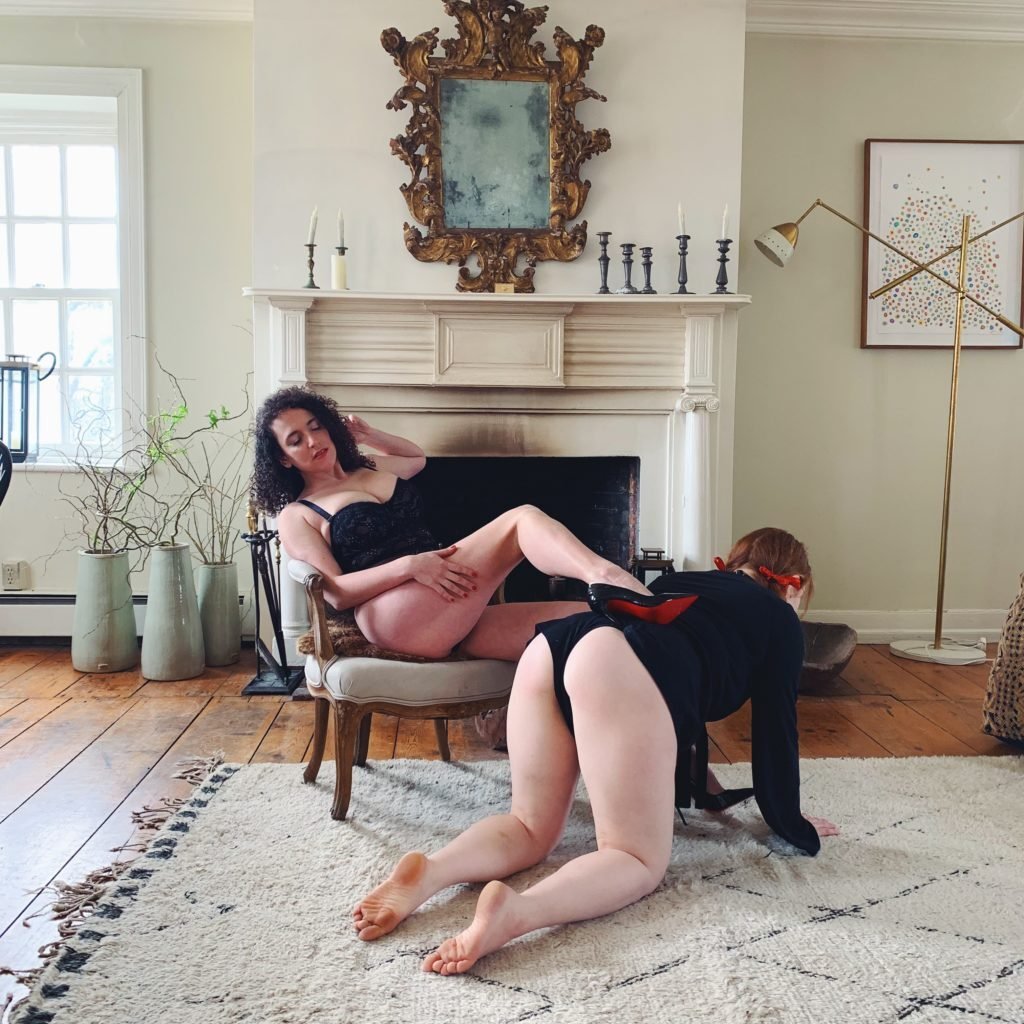
Erotic art and fetish photography often reflect the beauty of this kink. These classic images project the elegance of the Dominant and submissive relationship and use of human furniture in BDSM play. Erotic human furniture experiences can be performance art at its finest. In the film The Dukes of Burgundy, there is a lovely clip where the D/s couple discuss purchasing a device to turn the submissive into a human toilet.
There’s something undeniably theatrical about it. But it’s not just performance. This kink invites people into deep stillness, surrender, and service. It can be about humiliation. Or dignity. Or endurance. Or art.
We’ll get into how it works, why people love it, and how to do it safely. But first, let’s talk about the psychology behind it.
Psychological Aspects of Human Furniture Kink
This isn’t just about being still. It’s about being useful. Or, more precisely, being used.
And for many, that’s the point.
There’s a kind of internal quiet that happens when you surrender your identity to function. When you’re not expected to speak, move, or perform – only to be.
Understanding Objectification Play
People are into human furniture for a variety of reasons. Getting to be transformed into an object or a piece of furniture gives the submissive the experience of having a clearly defined use. Human furniture does not think about the news or ruminate and can give the submissive permission to enter a meditative trance state where their only purpose is to serve as an object.
While some may find objectification degrading, that is not true for everyone. Human furniture objectification is about narrowing focus. About choosing to be seen not as a person, but as an object with purpose.
Some find this meditative. Others find it humiliating in a way that excites them. Some just want to serve in silence. And others enjoy the psychological switch that happens when their body becomes furniture, but their mind stays alert.
I see objectification play as deeply symbolic. You’re not just holding a pose. You are being transformed with intention. You are being put to use.
Common Dynamics and Scenarios
In my practice, I most often see this kink show up in Femdom contexts. Submissives kneel as end tables. They’re assigned to support my legs while I read. They hold a light or a tray, instructed to stay still and silent.
Sometimes this happens in private. Sometimes at play parties. Sometimes discreetly at a restaurant or on the street. It’s not always explicitly erotic. Often, it’s a sign of obedience, devotion, or simple usefulness.
One of my longest-term D/s relationships (over 10+ years) is with my human footstool who serves me for hours, if not days at a time. He does not speak in front of me. I move him into the position that serves me and relax, resting my feet on my property.
This play works across many types of relationships. It could be:
- Part of a long-term D/s dynamic, where objectification deepens trust
- A one-time roleplay or fantasy scene
- Public or semi-public service at a party
- A private ritual shared only between two people
- Or even a solo experiment in endurance and surrender
What matters most is how it feels. Not what it looks like.
Some of the more common forms include:
- Serving as a footstool at the edge of a Dominant’s chair
- Kneeling as a tray holder, offering a drink or toy
- Standing as a lamp, holding light overhead
- Lying flat as a table, possibly with weight placed on the body
- Presenting as a pedestal, for display or humiliation
These can be combined with other elements like sensory play, discipline, or even performance art. (The Duke of Burgundy, anyone?)
Safety, Communication, and Consent
There’s something paradoxical about human furniture play. It can look calm, even passive. But behind that stillness is a deep awareness—of the body, of sensation, of trust.
Be mindful. Holding the same position for an extended period can create very real physical stress. So let’s walk through what you need to consider before, during, and after.
Physical Safety Risks
Here are some things to watch out for:
- Circulation can be restricted if limbs are bent or under pressure
- Nerve compression is a real risk, especially around the wrists, neck, or knees
- Muscles can fatigue quickly, even if the position looks “easy” from the outside
- Some poses can make it hard to breathe fully, especially if weight is placed on the chest or back
Check in regularly. Don’t assume that someone who isn’t speaking is fine—especially if silence is part of the scene.
Duration and Positioning Guidelines
Start with what feels manageable. If this kind of play is new to you or your partner:
- Keep scenes short at first
- Change positions if you want to extend the scene
- Choose stable, grounded positions like kneeling or lying down
- Use plenty of support—pillows, yoga blocks, blankets—to reduce strain
- Check for signs of numbness or shaking, especially in weight-bearing positions
This isn’t a hard rule. Some submissives train their bodies to hold poses for long periods. I’ve had clients serve as human furniture for entire weekends, only taking breaks to sleep. One of them would fall asleep under my feet while I worked, waking only when repositioned.
So yes—what’s safe and sustainable depends on the person, the position, and the level of experience and physical ability.
Pre-Scene Discussion Checklist
Before you begin, talk through:
- Any past injuries or mobility concerns
- Comfort with being ignored or used without acknowledgment
- Emotional associations with humiliation or objectification
- What type of object they’ll be playing (footstool, lamp, toilet)
- How long you’re aiming for—and how you’ll stop if needed
You don’t need to decide everything in advance. But do make space to name your limits, your desires, and your hesitations.
During-Scene Communication
When someone is serving as furniture, verbal communication may be limited—or intentionally restricted as part of the scene. That makes it even more important to build in reliable, accessible ways to check in.
Before you begin, establish:
- A clear non-verbal signal for discomfort, like tapping a hand or shifting a specific body part
- A drop item they can hold and release if they need the scene to pause
- Pre-set check-in moments, especially during longer scenes
- Visual cues, like intentional eye contact, blinking patterns, or movement restrictions being briefly relaxed
Just as important: give your furniture permission to request a position change. Tell them it’s part of their service to speak up when their body needs support.
If you notice muscle tremors, instability, or even a shift in breath, ask. Offer the option to adjust. You can train your furniture to serve within its capacity. That’s not failure. That’s sustainable submission.
And if they’re in subspace or too deep to respond clearly, your job as the Dominant is to observe, guide, and be ready to adjust the scene with care.
Practical Techniques and Positions
You don’t need elaborate gear or acrobatic poses to get started with human furniture play. In fact, the simplest scenes are often the most powerful.
Beginner-Friendly Positions
Start with positions that minimize strain and allow for some flexibility. These aren’t about endurance—they’re about establishing comfort, control, and awareness.
Some good places to begin:
- Kneeling footstool on all fours, with cushions under knees and wrists for support
- Lap table while seated, holding a tray or item on thighs
- Side-rest pose, lying on your side with an object held lightly
- Shelf squat, with your back supported by a wall and a light item balanced (this is an endurance pose)
- Carpet or low footstool, lying on your back with a bolster or pillow under the knees to relieve pressure on the spine
These positions help avoid overextension and allow both Dominant and submissive to observe physical cues. Use padding wherever possible, and take breaks even if the submissive insists they’re fine—sometimes they don’t realize until after.
Advanced Variations
If you’re more experienced and know how your body responds:
- Try standing as a lamp, holding an object overhead for brief intervals
- Use bondage to limit movement (but always watch circulation)
- Add decorative elements like candles, chains, or specific clothing
- Incorporate humiliation elements, like becoming a toilet or foot mat
These scenes require strong communication and regular breaks.
Scene Integration
Human furniture play can blend beautifully with:
- Domestic service scenes
- Objectification or humiliation kinks
- Aesthetic play (e.g. posing for photos or art)
- Ritual-based Femdom dynamics
- Meditation, sensory restriction, or breath control
Think about the space, the sound, the pacing. You’re not just building a pose—you’re building an atmosphere.
Aftercare for Human Furniture Scenes
Letting go of your identity to become an object is intense. Coming back into your body can take time.
Physical Recovery
Help the submissive recover with:
- Water or tea, maybe something salty or sweet
- Gentle stretching or massage of wrists, knees, or shoulders
- Support lying down or being wrapped in a blanket
- A warm bath or shower if needed
Even if the scene looked quiet, the physical exertion can be real. Give space to rest.
Emotional Processing
Becoming an object can feel freeing. Or humiliating. Or sacred. Or all three at once.
Ask:
- “What came up for you?”
- “Did anything feel surprising or challenging?”
- “Do you want to talk now or check in later?”
- “What did you enjoy most?”
Even if it was a short scene, the emotional resonance can run deep. Validate that.
Ongoing Check-ins
Sometimes the drop comes later. Or the meaning hits a day or two after the scene.
Send a message. Offer a phone call. Make space for reintegration. And adjust your future scenes based on what you both learn. Your availability for check-ins is something that can also be negotiated prior to a scene. In my scenes. I typically ask for a reflection e-mail in the 48-hours after a scene.
Frequently Asked Questions
Is human furniture BDSM safe?
It can be, if practiced with awareness, communication, and clear boundaries. The main risks are physical, such as nerve compression or loss of circulation, but psychological impacts can also surface. Go slow and build trust.
How long should human furniture sessions last?
If you’re just starting, see how 10 minutes feels. With experience and good communication, some scenes can stretch to hours or days. Breaks, repositioning, and check-ins are essential, no matter how long you play.
What’s the difference between human furniture and other objectification play?
Human furniture play usually involves a physical, functional role—being used as a table, stool, lamp. Other objectification play might involve language, service roles, or mental framing without the physical positioning.
Do I need special equipment?
Not necessarily. Most people use household items, pillows, yoga props, blankets. Some enjoy aesthetic additions like cuffs,posture collars, gags with adapters to hold ashtrays or cups, but none of that is required.
Who may this kink especially resonate with?
If you understand the meditative nature of yoga, you may find this kink seductive. If you want to serve a beautiful and sexy woman in a way she enjoys that allows you to detach yourself these scenes may appeal to you. If you are nervous about an in-person session with your Domme this may be a nice starting off point to explore your kinks! I am of the strong belief that everyone would benefit from being a piece of human furniture at least once.
To become an object and still be seen, that’s what makes human furniture play powerful.
It’s not passive. It’s not hollow. It’s not meaningless.
It’s art. It’s endurance. It’s service. And when done with care and consent, it’s one of the most striking ways to explore power, identity, and presence in BDSM.
Managing the ego in service to your Domme is always appropriate and beneficial and this kink will help do that.
Author
